
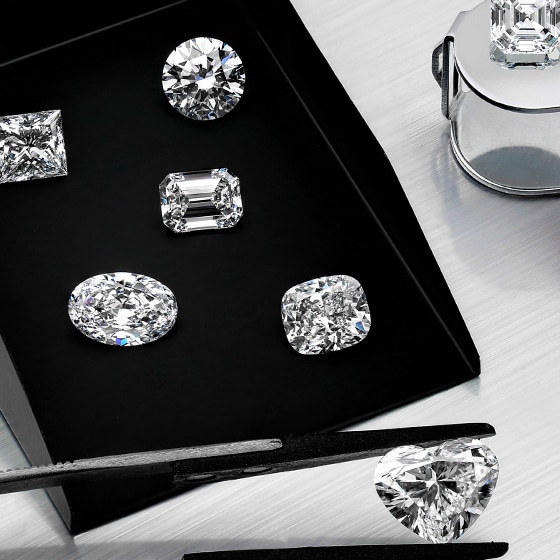
While nature determined the color and clarity of a natural diamond, man is responsible for the cut quality which brings it to life. The planning, proportions, cutting precision, and details of the finish determine how brilliant, dispersive, and scintillating the diamond will be. If the cutting factors under man’s control are not optimized, the appearance of the diamond can be adversely affected. Diamond faceting has changed over time, particularly as lighting has evolved. There are many shapes and cutting styles, each with different visual properties. The most popular diamond in the age of modern electric lighting is the Round Brilliant.
Diamond Cut
Diamond Cut involves a series of different steps to transform raw, unrefined rough crystals into brilliant, polished diamonds which have proven to be the world’s most popular gemstone. This journey is deliberate and requires skilled artisans who plan and shape the stone’s facets with precision.
A diamond cut to top quality will display brightness, fire, contrast, and scintillation, aspects that define the very essence of its appeal. Through mastery and craftsmanship, cutters maximize the inherent beauty of each stone, using the diamond cut scale to guide their planning, working toward a finished product which will captivate viewers with its sparkle and sophistication.
Diamond Cut Chart
The diamond cut chart is essential for evaluating how well a diamond has been cut and polished. It measures the proportions that influence the stone’s performance in terms of light reflection and refraction. The diamond cut scale provides ranges based on optimum measurements and degrees of finish, helping jewellers and buyers alike understand the gem’s value and appeal.
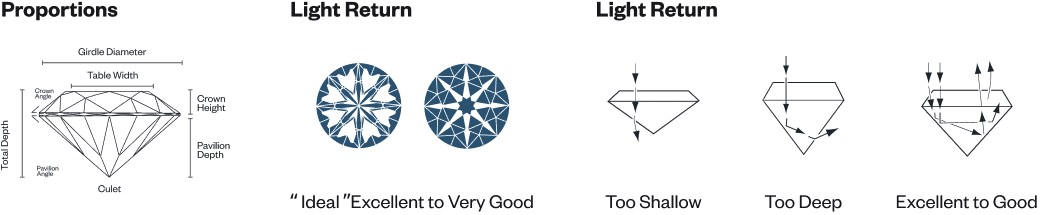
- Ideal or Excellent: Represents the highest quality of diamond cut, allowing maximum return of light and brilliance to the viewer’s eyes. Such stones exhibit unparalleled dynamic beauty, as their proportions, symmetry, and polish stand at the pinnacle of the diamond cut scale.
- Very Good: A diamond cut that reflects and returns most of the light to the viewer’s eyes, making high quality visual impact. While slightly less dynamic than Excellent, it offers an outstanding balance of beauty and value.
- Good: This grade on the diamond cut scale represents a balance between performance and practicality. While some light might escape through the bottom as leakage, cuts ranked good may still deliver considerable brilliance and appeal.
- Fair: While lacking the intense sparkle of higher grades, stones graded fair on the diamond cut chart may be popular for those seeking affordable elegance and subtle beauty.
While nature determined the color and clarity of a natural diamond, man is responsible for the diamond cut quality which brings it to life. The planning, proportions, cutting precision, and details of the finish determine how brilliant, dispersive, and scintillating the diamond will be. If the cutting factors under man’s control are not optimized, the appearance of the diamond can be adversely affected. Diamond cut and scale have evolved over time, particularly as innovations have advanced artistry and precision in gem cutting. There are many shapes and cutting styles, each with different visual properties. The most popular diamond cut in the age of modern electric lighting is the Round Brilliant, celebrating both traditional craftsmanship and contemporary aesthetics.
When a ray of light touches the surface, part of it is reflected back. This is called external refraction. The rest of the ray penetrates the stone and moves through it. This is known as refraction. The part of the ray reflected back to the surface exits, broken into spectral colors in a prism-like effect. This is known as dispersion. All of these elements contribute to the appearance of a diamond.
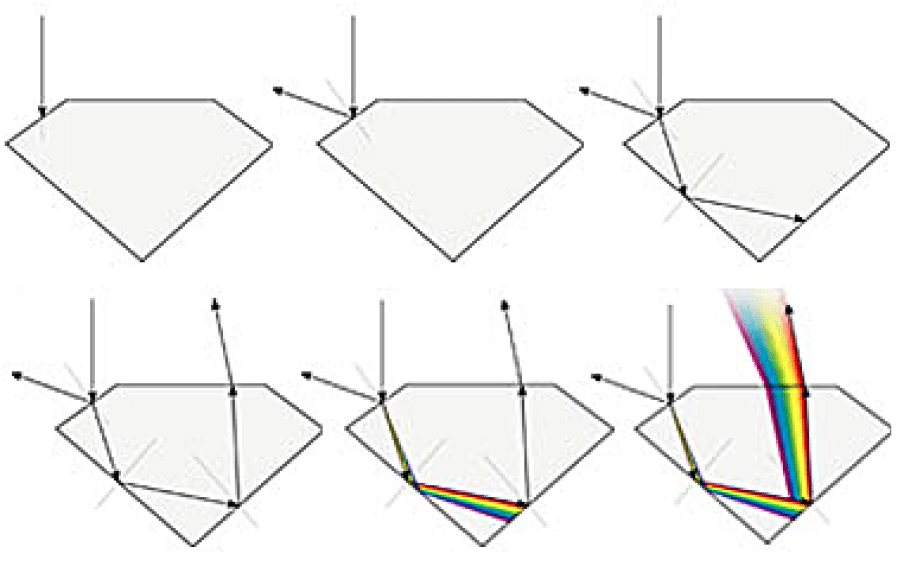
Elements of diamond beauty can be described as brilliance (all light returning to the eye), brightness (reflected and reflected white light) Fire (dispersed light seen as flashes of color), contrast (intense bright and dark areas created by the viewer’s presence) and scintillation or ‘sparkle’ (all these components seen as the diamond, the light source or the observer move). These qualities combine to create the life of the diamond and the way it reacts to lighting and environment.
Diamond Cut Grading
Diamond cut grading is pivotal in quantifying a diamond’s excellence. It employs the diamond cut scale to determine a stone’s craftsmanship, evaluating attributes like proportion, symmetry, and polish. A diamond graded on this scale can range from Fair to Excellent, encapsulating how adeptly a stone has been transformed from its rough origin. The finer the cut, the more vibrant the diamond will appear, as its facets work together harmoniously to enhance the overall appearance. This evaluation not only judges the craftsmanship but also translates into the visual brilliance, ultimately affecting the diamond’s market value. Essence and quality are meticulously balanced, ensuring each diamond’s cut reveals the true beauty within its structure.
Learn With Videos
Diamond Cut FAQS
- What is the best cut for a diamond?
- The best diamond cut is considered to be the Excellent cut, or Ideal cut, offering maximum brilliance and fire.
- The best diamond cut is considered to be the Excellent cut, or Ideal cut, offering maximum brilliance and fire.
- How many cuts are there in a diamond?
- There are numerous diamond shapes, a word sometimes confused with cut. The term diamond cut refers to the collective proportions, polish and symmetry of a single stone.
- There are numerous diamond shapes, a word sometimes confused with cut. The term diamond cut refers to the collective proportions, polish and symmetry of a single stone.
- What is a full cut diamond?
- A full cut diamond typically features 57 or 58 facets, enhancing light performance and brilliance.
- A full cut diamond typically features 57 or 58 facets, enhancing light performance and brilliance.
- What is the original diamond cut?
- The original diamond cut in the 1500s was a style called Rose Cut, which evolved through Mazarin and Peruzzi Cuts to become Old Mine and Old European Cuts, characterized by a cushion shape and large facets, and ultimately the Round Brilliant Cut.
- The original diamond cut in the 1500s was a style called Rose Cut, which evolved through Mazarin and Peruzzi Cuts to become Old Mine and Old European Cuts, characterized by a cushion shape and large facets, and ultimately the Round Brilliant Cut.
- Is diamond cut better?
- Yes, a superior diamond cut can significantly enhance a stone’s light reflection, refraction, fire, and overall appeal.
- Yes, a superior diamond cut can significantly enhance a stone’s light reflection, refraction, fire, and overall appeal.
- Which diamond cut is most expensive?
- The Round Brilliant Cut, due to its precise craftsmanship and diamond cut scale rating, is generally the most expensive.


