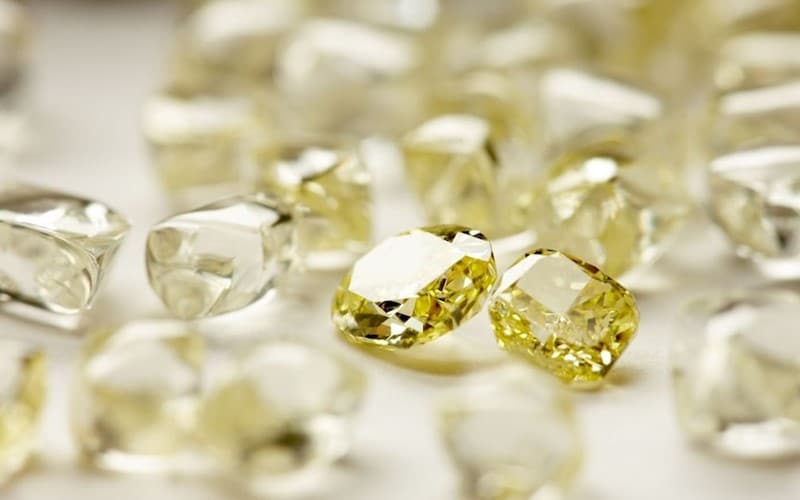

Natural diamonds have captivated humanity for centuries with their unmatched brilliance, rarity, and enduring value. Their journey—from deep within the Earth to becoming a cherished piece of jewelry—is a story of awe-inspiring natural processes, scientific discovery, and meticulous craftsmanship.
Understanding this journey not only deepens our appreciation for these extraordinary gems but also empowers us to make informed decisions when purchasing or investing in natural diamonds.
Whether you’re exploring diamonds for a special occasion or simply curious about their origins, learning each step of their transformation offers insight into what sets natural diamonds apart from other gemstones and synthetic alternatives.
The Origins of Natural Diamonds
Natural diamonds have a story that begins billions of years ago, deep beneath the Earth’s surface. These extraordinary gems form 140 to 190 kilometers below ground, within the Earth’s mantle, where carbon atoms are exposed to intense heat and pressure. Over vast spans of geological time, these atoms bond into a rigid crystal lattice structure, resulting in the hardest natural substance known to humankind. Powerful volcanic eruptions then carry these rough diamonds upward, embedding them in the Earth’s crust, where they lie in wait for discovery.

What sets natural diamonds apart from their synthetic counterparts is this incredible natural journey. While lab-grown diamonds may replicate some of the physical characteristics, only natural diamonds possess the distinctive inclusions and growth patterns formed by the Earth’s forces over millions of years. These unique features not only enhance their beauty but also affirm their authenticity and irreplaceable rarity.
How Natural Diamonds Are Extracted
The extraction of natural diamonds is a sophisticated and tightly regulated process, carefully designed to optimize recovery while minimizing environmental impact. It begins with geological surveys, where experts identify promising sites by analyzing rock formations and surface indicators. Once a target location is found, core sampling is performed to confirm the presence of diamond-bearing rock, typically kimberlite.

Diamond mining can take several forms depending on the depth of the deposit:
• Open-pit mining is used when diamonds are near the surface. Large amounts of earth are removed layer by layer to reach the ore.
• Underground mining is employed for deeper deposits, requiring the construction of shafts and tunnels to extract material from below.
Once the ore reaches the surface, it undergoes crushing and screening in multiple stages to break down rock and isolate the diamond-rich concentrate.
A crucial step in modern diamond recovery is cyclonic separation, often followed by X-ray fluorescence (XRF) technology. These systems detect the unique reflective properties of diamonds, allowing them to be automatically identified and sorted from other minerals.
Throughout the extraction process, the diamond industry is placing increasing emphasis on ethical and sustainable mining practices. Many operations now follow strict environmental and social standards, supporting local communities and adhering to frameworks like the Kimberley Process, which ensures the responsible sourcing of natural diamonds.
The Timeless Appeal of Natural Diamonds
The allure of natural diamonds lies in their rare combination of beauty, durability, and intrinsic value. Renowned as the hardest natural material on Earth, diamonds resist scratches and wear, allowing them to retain their brilliance across generations. Their ability to refract and reflect light creates a captivating fire and sparkle—qualities that synthetic alternatives often struggle to replicate.
Every natural diamond is truly one of a kind, shaped by the forces of nature over billions of years. Subtle inclusions and distinct characteristics within each stone serve as a testament to its unique journey through time. For many, owning a natural diamond is about more than its appearance—it’s about holding a fragment of Earth’s ancient history and celebrating moments of lasting love and commitment.
When evaluating the price of a natural diamond, it’s essential to consider more than just size. Rarity, quality, and the skilled craftsmanship required to reveal a diamond’s full potential all play vital roles in its value. These factors contribute to why natural diamonds continue to be the preferred choice for heirloom jewelry and meaningful life milestones.

Certification and Authenticity
Certification plays a crucial role in the accurate valuation of natural diamonds, offering deeper insight into each gem’s unique characteristics and origin. Esteemed laboratories such as the International Gemological Institute (IGI) rigorously examine diamonds to verify both authenticity and quality. This evaluation is based on the 4Cs—cut, color, clarity, and carat weight—and results in an official grading report that serves as the diamond’s identity card.
A certified natural diamond provides buyers with peace of mind, confirming that the stone is genuine, and assessed by impartial experts. When purchasing a natural diamond, always insist on certification to ensure you’re investing in a gem of true quality, authenticity, and enduring value.
Conclusion
The journey of a natural diamond—from deep within the Earth to its place in fine jewelry—is a remarkable blend of nature’s artistry and human craftsmanship. Every phase, from its ancient formation to ethical sourcing, expert grading, and precise cutting, contributes to its lasting value and significance. Whether admired for their brilliance, cherished as a legacy, or chosen as symbols of enduring love, natural diamonds continue to embody timeless elegance, authenticity, and sophistication.
FAQs About Natural Diamonds
1. What makes natural diamonds unique?
Each diamond is one of a kind, formed over billions of years, making them truly rare.
2. Are natural diamonds eco-friendly?
While mining has an environmental impact, many companies follow sustainable practices to minimize harm.
3. Can natural diamonds lose their sparkle?
With proper cleaning and care, natural diamonds retain their brilliance forever.
4. How are natural diamonds priced?
Prices depend on the 4Cs – Cut, Clarity, Color, and Carat weight. The natural diamond price is also influenced by demand, certification, and the unique history of each stone.
5. Are natural diamonds worth the investment?
Yes, they hold their value better and are considered timeless heirlooms.