
 The 5th C: Confidence
IGI diamond grading follows a strict sequence of intake, analysis, and reporting to ensure the highest standards of security, anonymity, accuracy, and consistency. This meticulous process reinforces the diamond quality standards that IGI is known for, ensuring proper valuation as depicted in the diamond quality scale.
Learn more with videoAnonymous Unique Report Number
Diamond grading is entirely anonymous. Upon arrival at IGI, every diamond receives a unique auto-generated IGI identification number. To ensure neutrality and objectivity, all owner information is masked. The IGI identification number, exclusively, is seen by graders. The diamond returns to central control following each stage of grading to randomize the gemologists who examine it. After grading, the unique report number becomes the official IGI grading report number, accessible with the Verify Your Report feature. This approach integrates seamlessly with the diamond grading scale chart, maintaining integrity throughout the assessment.
Compulsory Screening
IGI performs the industry’s most advanced screening and detection services on every diamond, gemstone, and jewelry item submitted for analysis. State-of-the-art technologies are used to determine naturally occurring, laboratory-grown, or simulant origin. The world’s most prestigious brands rely on IGI as their authoritative resource for authenticity and diamond quality assessment of diamonds and gemstones of all categories, classifications, and weights. The precision of the diamond grading scale and use of the diamond quality chart in each assessment ensures accurate, consistent grading that aligns with industry-wide standards.
IGI has received ISO 17025 accreditation for both natural and laboratory grown diamond grading.

The Diamond Grading Process
Over the last 50 years, IGI has developed strict diamond grading protocols to ensure consistency and transparency for both consumers and dealers alike. An IGI report is used and respected around the world to support the buying and selling of precious gems. The IGI grading scale and diamond quality chart underpin this process, establishing a trusted benchmark for diamond grading.
Learn more with video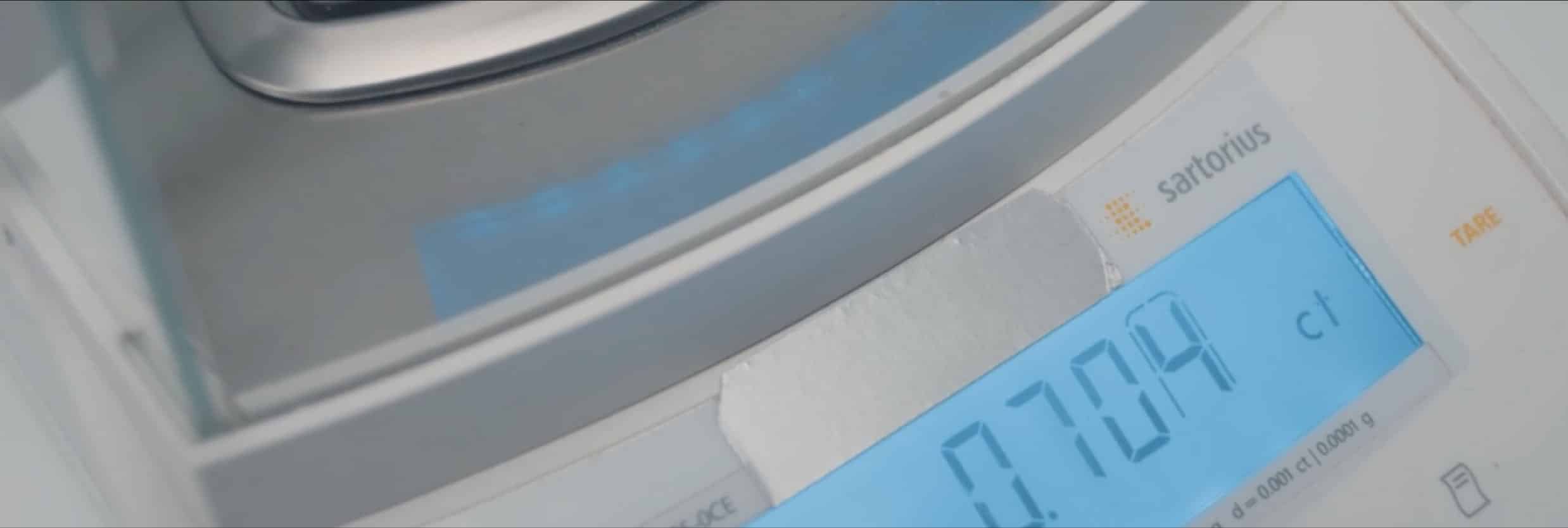
Step 1
Carat Weight
The first stage in diamond grading is weighing the diamond. Carat weight is the standard weight unit for gemstones. Diamond grading scales are calibrated to four decimal places to ensure accuracy. Carat weight is reported to two decimal places.
Measurements
The diamond’s measurements are established using a gemstone-specific optical measuring device. The scanner creates a 3D digital sculpture of the faceted stone’s total geometry, including all proportions, measurements, and facet angles. Key measurements are printed on the diamond’s grading report.

Step 2
Color and Fluorescence Grading
Diamond color is graded in a standardized viewing environment. IGI gemologists analyze color in the D to Z color range on the diamond quality scale with the diamond placed upside down, viewed through the side, to facilitate a neutral view. Grading color from the top is not practical because of three factors which may influence color appearance in normal viewing.
- The diamond’s shape
- The way the diamond was cut
- The presence of fluorescence
Color is graded using calibrated master color stones. The diamond grading process involves multiple graders submitting opinions independently, while uniformly applying the diamond grading scale.
Fluorescence Grading
Fluorescence is a measure of the diamond crystal’s reaction to ultraviolet (UV) light. Around 35% of all diamonds emit fluorescence when subjected to UV light. If fluorescence is present, the diamond grading scale chart is applied and the strength and color of the fluorescence are recorded.

Step 3
Clarity and Finish Grading
IGI grades clarity according to internationally accepted standards at 10X magnification, according to the visibility, size, number, location, and nature of internal and surface characteristics at that magnification. Diamonds with characteristics which are immediately obvious or noticeable are likely candidates for the lower grades, whereas diamonds with characteristics which are minor, minute, or extremely difficult upon initial analysis at that magnification may qualify for the higher grades. This detailed assessment forms a crucial part of the diamond quality evaluation.
Plotting
The gemologist will use a step-by-step wedge technique, examining the diamond in segments, to note the location and nature of all relevant clarity characteristics. A map of the diamond’s internal and external clarity characteristics, as observed at 10X magnification, is provided for purposes of information and identification on a diagram representative of the diamond’s shape and faceting style.
Step 4
Cut Grading
IGI assesses craftsmanship components for all diamonds according to the diamond quality scale for each shape – with cut grading and optional light performance reports for round brilliant cuts – and a cut grading option for fancy shaped diamonds.
Round Brilliant Cut Diamonds
IGI assesses all round brilliant cut diamonds in the areas of polish, symmetry, and proportions. The top cut grade a round brilliant diamond can earn is Excellent-Ideal. The overall proportions, measurements, and facet angles determine the Cut Grade. If the polish and symmetry assessments are lower than the grade according to overall proportions, they may cause the overall cut grade to be lowered, in accordance with the diamond grading scale chart, also known as a “4Cs chart.”
Light Performance Report for Round Diamonds
Diamonds of the same shape, size, and cut grade can have different visual tendencies. For this reason, IGI offers a light performance report option for round diamonds displaying top optical performance, which provides a primary Light Performance score and scores for three observable sub-components: Brightness, Fire, and Contrast.
- See a video overview of the Light Performance Grading process
- See and download the IGI Light Performance Cutting Guidelines
Cut Grading for Fancy Shaped Diamonds
IGI assesses all fancy-shaped diamonds in the areas of polish, symmetry, and proportions. All shapes and colors will have craftsmanship grades for polish and symmetry noted on the grading report. Cut grading for fancy shapes ranges from Excellent to Poor based on the process and parameters linked below and is optional.
- Scroll down this page for a video overview of the Fancy Shape Cut Grading process
- See and download the IGI Fancy Shape Cut Grading Guidelines for Excellent

Step 5
Verification
In the areas of color and clarity analysis, multiple gemologists take the diamond through the grading steps and provide opinions according to the diamond grading scale, completely independent from the others. Color and clarity grades are only finalized when a consensus is reached.
Step 6
Grading Controls
Between each grading step, a diamond returns to central control, the assignment to various gemologists is completely random. Every diamond is electronically tracked so that central control knows its location at any time and may review each step in the process leading to its complete assessment according to the IGI grading scale.
Step 7
Laser Inscription
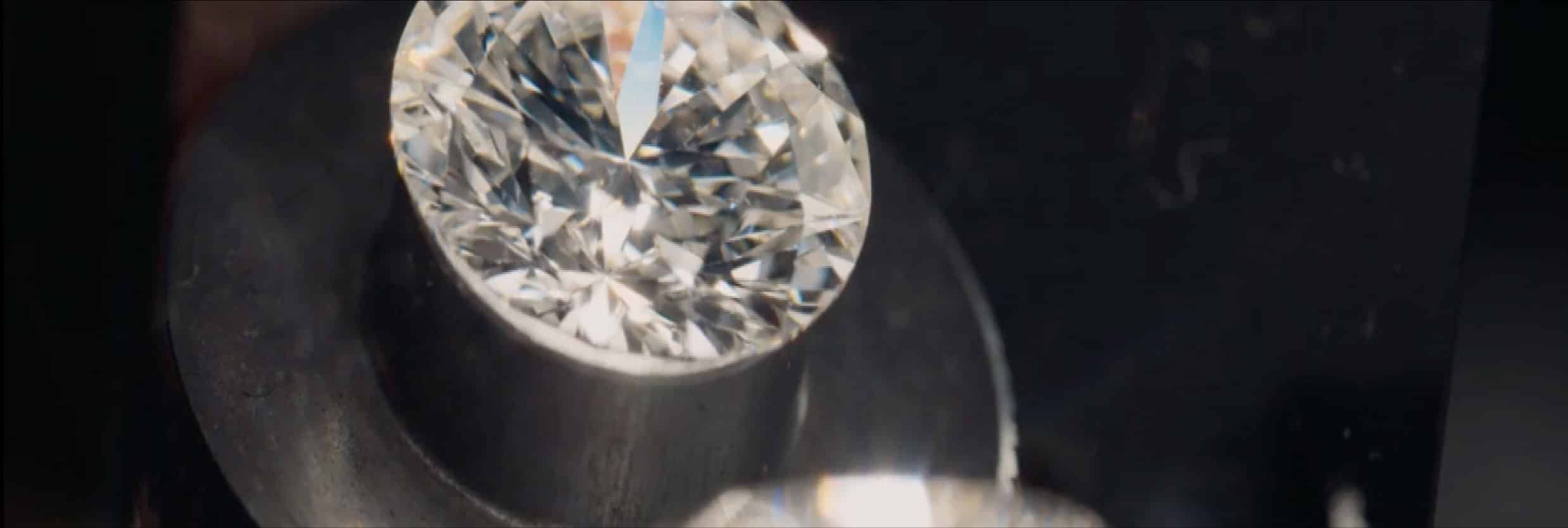
IGI’s LASERSCRIBE SM, combined with the standard of excellence and recognition of IGI’s Diamond Grading Reports, assures you of both the quality and identification of your diamond. In fact, every laboratory-grown diamond IGI grades will have an inscription identifying laboratory-grown origin automatically applied.
For natural diamonds, the laboratory will apply laser inscriptions by owner’s request, typically the diamond’s grading report number. If the diamond belongs to a brand or specific store, the owner may also have a logo inscribed.

Step 8
Report Printing and Security
Diamond grading reports are printed on advanced security paper with no less than five security features. These include tear-proof paper, micro printing, holographic, and other security features. The diamond is weighed, verified as matching the report by central control, cleaned, and prepared for return to its owner along with the new diamond grading report, which is placed in a protective sleeve or binder.
Step 9
Digital Grading Report Posted
Once the diamond and report have left the diamond grading laboratory premises, a digital copy of the report will be posted online. This report is accessible using the IGI Verify Your Report feature. The QR (Quick Response) code on the printed grading report can also be scanned by a QR code reader and will take the user to the corresponding grading report, posted online.
Consumer Education
IGI consumer education is designed to prepare shoppers to make informed decisions when buying or selling diamonds, gemstones and jewelry.

Colored Gemstones
From rubies, sapphires and emeralds to the birthstones and beyond, explore the world of color in our colored gemstone tutorial.

Lab Grown Diamonds Education
See how laboratory grown diamonds are physically, optically and chemically identical to natural diamonds which formed in the earth.
Diamond 4Cs
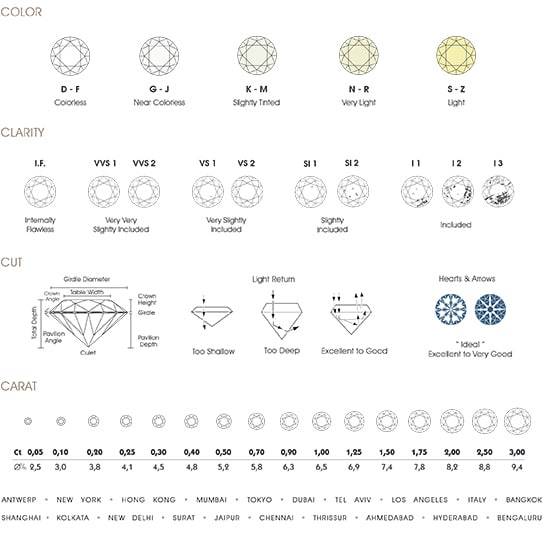
Learn about Cut, Clarity, Color and Carat weight and the international grading system that determines the quality and price of a diamond.

Enroll in our Diploma Programs
IGI trains jewelry professionals in more places around the world than any other institute, offering an array of campus and online courses which are unrivaled in diversity and reach.

Diamond Grading FAQS
-
What is the diamond color and clarity scale?
The diamond grading scale ranks color from D (colorless) to Z (light yellow or brown), and clarity from Flawless to Included, detailed in the IGI report.
-
How does diamond grading work?
Diamond grading evaluates a stone’s 4Cs – Carat weight, Color, Clarity and Cut assessed by IGI’s advanced techniques and equipment.
-
What information does a diamond quality chart provide?
A diamond quality chart offers details on a diamond’s Carat weight, Color, Clarity and Cut, crucial for valuation and purchase.
-
What are the factors considered in the diamond grading scale?
The diamond grading scale includes color accuracy, clarity visibility, cut proportions and associated visual performance, and precise carat weight quantification.
-
How is diamond quality determined?
Diamond quality is measured through expert analysis of the 4Cs, with results shown on a diamond quality scale chart.
-
What does a diamond grading scale chart include?
A diamond grading scale chart, also known as a “4Cs chart”, details a diamond’s evaluation, recording specific grades for its 4Cs, confirming its assessed quality.
-
Why is diamond grading important for buyers?
Diamond grading provides buyers with verified information, ensuring informed decisions and trust in their investment’s authenticity.