
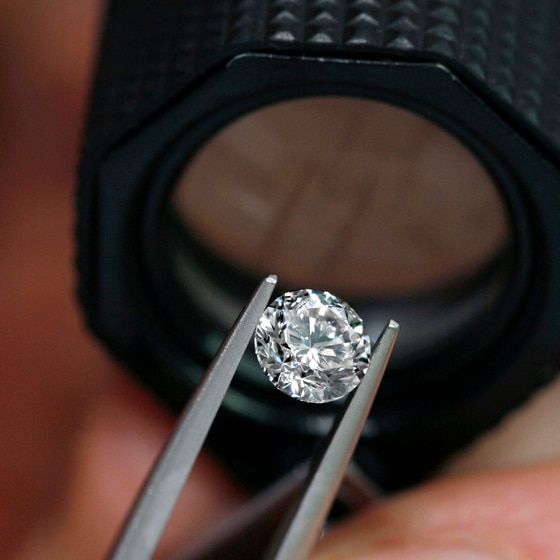
Since diamonds form under extreme heat and pressure, internal and external characteristics are common. These characteristics help gemologists separate natural diamonds from synthetics and simulants, and identify individual stones. There are two types of clarity characteristics: inclusions and blemishes. To grade the clarity of a diamond, it is necessary to observe the number and nature of external and internal characteristics of the stone, as well as their size and position. The difference is based on their locations: inclusions are enclosed within a diamond, while blemishes are external characteristics. IGI grading reports show plotted diagrams of clarity characteristics marked in red for internal and green for external features.
Diamond Clarity Terms
While grading laboratories commonly refer to inclusions and blemishes as “clarity characteristics” there are more casual terms such as “flaws” or “imperfections.” Clarity is also associated with diamond purity in many cultures around the world.
Diamond Clarity Chart
The diamond clarity chart is a visual representation that categorizes diamonds based on their internal and external characteristics. The diamond clarity chart is indispensable for buyers and enthusiasts to identify and understand the clarity grade of their chosen gemstone, helping them to make informed decisions. The diamond clarity chart aids in differentiating gemstones on a universally recognized scale of clarity. Here are the key pointers:
- Flawless: Refers to diamonds with no inclusions or blemishes visible under 10x magnification, the pinnacle of the diamond clarity scale. Such rarity makes Flawless diamonds exceedingly desirable in the market, often commanding premium prices due to the perception of perfection and unparalleled purity on the diamond clarity scale.
- Internally Flawless: This grade implies small surface blemishes, yet no internal inclusions visible at 10x magnification. These stones possess superior clarity, and any minor surface markings can often be polished away, enhancing their overall value on the diamond clarity chart.
- VVS1 & VVS2: Very, Very Slightly included characteristics are challenging to detect even under magnification. These minute inclusions are nearly always undetectable to the naked eye, allowing these diamonds to maintain their brilliant sparkle and high standing on the diamond clarity scale.
- VS1 & VS2: Very Slightly included; the characteristics are minor and only detectable with effort under magnification. Despite having minor inclusions and blemishes, these diamonds offer excellent value, balancing clarity and cost without compromising visual appeal.
- SI1 & SI2: Slightly Included; inclusions are noticeable under magnification, and may sometimes be visible to the naked eye. However, SI grades can still yield beautiful, perceptually clean diamonds, particularly when inclusions are strategically positioned, minimizing their impact on appearance.
- I1, I2 & I3: Included; inclusions are obvious and those in the bottom two grades may affect transparency and brilliance. While lower on the diamond clarity scale, these diamonds offer affordability, proving ideal for shoppers prioritizing carat size over perfect clarity.

How is the Grade on the Diamond Clarity Scale Determined?
In addition to analysis using 10x magnification, the diamond clarity scale relies on five key factors which are weighed along with with the visual assessment.
- Number: A greater quantity of inclusions generally reduces the clarity, lowering the perception of diamond purity as well as its position on the scale. While multiple inclusions can scatter light unfavorably, strategic cutting often mitigates this effect, preserving the diamond’s visual integrity.
- Position: Inclusions closer to the center are generally more visible which will lower the perception of diamond purity. Characteristics at the edges can be less noticeable and may possibly be obscured or covered when the stone is mounted in jewelry, minimizing its visual impact.
- Size: Larger inclusions are more apparent and impact the diamond clarity scalemore significantly, lowering clarity grades. The dimensions of these inclusions (paired with color, described below) can influence how light travels through the diamond, affecting the overall sparkle and attractiveness.
- Nature: The type of inclusion affects both the perception of diamond purity and potentially its durability. For example, sparse pinpoint inclusion are considered extremely minute and benign. Other inclusions, such as feathers, may alternately weaken the stone, while dense clouds could diminish lustre by dispersing light unpredictably.
- Color: The visibility of inclusions relates to how they contrast with the rest of the stone, which is crucial in clarity grading. Transparent and translucent inclusions have less impact than opaque or dark inclusions, which stand out in relief and are far more visible.
Learn With Videos
Diamond Clarity FAQS
-
Which diamond clarity is best?
The highest diamond clarity grade is "Flawless," indicating no visible inclusions or blemishes visible, even at 10x magnification.
-
What are the grades of diamond clarity?
Grades range from Flawless or Internally Flawless (F/IF), descending through VVS, VS and SI to included (I), depending on the presence and visibility of inclusions on the diamond clarity scale.
-
Is VS1 or VS2 better?
VS1, with fewer and smaller inclusions than VS2, is superior on the diamond clarity chart, so it’s generally perceived as a grade of higher quality.
-
Is SI clarity good for a diamond?
SI on the diamond clarity chart indicates moderate diamond purity, with some inclusions; however, well-placed inclusions may remain invisible to the naked eye.
-
How does the diamond clarity affect the diamond’s price?
Higher diamond clarity grades typically lead to higher prices, as fewer characteristics are traditionally perceived as greater purity, making the stone more desirable and rare.


