

Did you find the perfect ring online? Here’s why a grading report matters more than the sparkle.
In a world where online shopping has become second nature, buying diamond jewelry over the internet holds undeniable appeal. With the digital marketplace booming, shoppers now have access to a wide range of options that were once out of reach.
However, since you can’t physically examine the stone, understanding the importance of a report becomes crucial. This document—often issued by reputable gemological laboratories like the IGI —empowers you with the knowledge to verify the diamond’s authenticity and quality. It ensures that what you see on your screen accurately reflects what you’ll receive, giving you complete control and confidence in your diamond jewelry purchase.
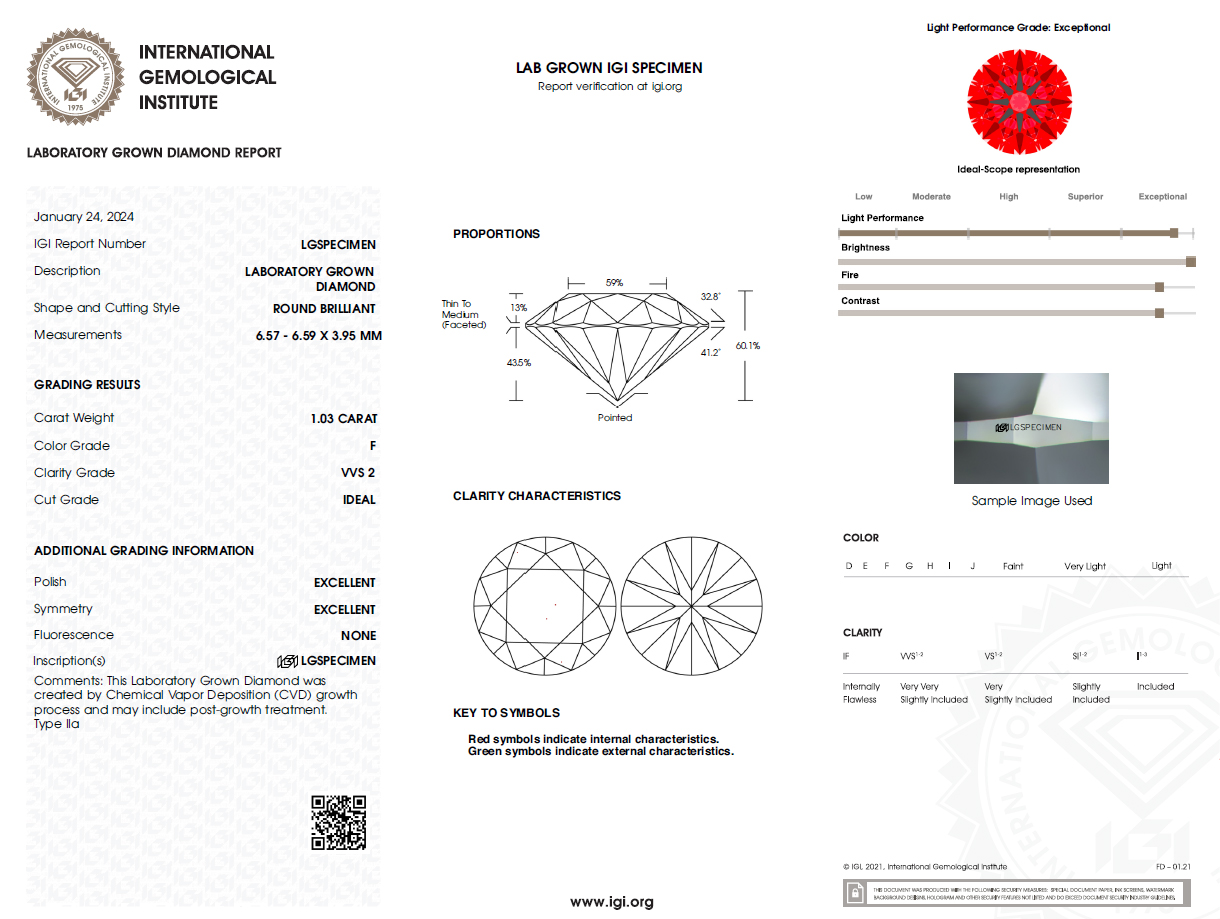
What Is a Diamond Report?
Reputable gemological laboratories, such as the International Gemological Institute (IGI), provide these types of reports.
It’s essential to understand that a diamond report is not a sales invoice or an appraisal. It does not assign a monetary value to the stone. Instead, it offers an in-depth analysis of the diamond’s characteristics—including Carat weight, Color, Clarity, and Cut—as well as other critical factors such as fluorescence, polish, and symmetry.
For buyers, especially those purchasing online, a report is a crucial tool. It verifies that the diamond meets specific quality standards, offering peace of mind that the grades is accurate. This reassurance, based on solid information, is crucial for making an informed decision about purchasing diamond jewelry.
Why Reports Matter When Shopping Online.
In the realm of online shopping—where you often can’t physically inspect the product—purchasing diamond jewelry presents unique challenges. A diamond report serves as a critical safeguard, helping to turn potential pitfalls into confident and informed decisions.
Trust & Transparency: A diamond report from the International Gemological Institute (IGI) provides essential transparency. It assures buyers of the diamond’s authenticity and quality—which is crucial when viewing the gemstone in person is not possible.
Quality Verification: Documentation accurately confirms the diamond’s 4Cs—Carat weight, Color, Clarity and Cut—ensuring that you receive exactly as advertised. It prevents misrepresented or lower-quality stones. Most reports also include details on fluorescence, polish, and symmetry, offering a comprehensive evaluation of the gem.
Value for Money: Understanding whether a diamond is natural or a lab-grown diamond is vital information often included in the report. The report ensures that these distinctions are clearly defined, thereby protecting and helping to align the stone with its true quality.
Authenticity & Origin: Reports identify a diamond’s origin—whether natural or lab-grown—enhancing transparency and giving you greater confidence in your choice.
Resale & Insurance: Graded diamonds are easier to insure and sell, as insurers and buyers often require formal documentation to establish quality and value. It not only protects your diamond but can also enhance its long-term potential.
In conclusion, diamond reports transform the online buying experience from a potential gamble into a secure, well-informed transaction by embedding trust and transparency into the purchase process.
What Happens If You Skip the Grading Report?
Skipping the report when purchasing diamond jewelry involves significant risks. Without a diamond report, buyers may unknowingly purchase synthetic, treated, or misrepresented stones with no way to verify the diamond’s true quality or authenticity.
Unverified quality claims can lead to overpaying for stones that don’t meet the advertised standards, resulting in potential financial loss. Additionally, you may choose to upgrade, insure, or resell the diamond. In that case, the lack of a grading report presents significant obstacles, as there is no trusted documentation to establish the stone’s value or grading.
Ultimately, bypassing the grading report removes a vital layer of protection, exposing buyers to unnecessary uncertainty—risks that can be easily avoided by choosing graded diamonds.

How to Shop Smartly for Diamonds Online Using Diamond Grading Reports
To navigate the world of online diamond jewelry purchases wisely, always insist on receiving a copy of the diamond report before completing your transaction. This document is your guarantee of the stone’s authenticity and quality.
When applicable, match the grading report details with the laser inscription on the diamond’s girdle—this added step helps verify that the stone you’re buying is the one described in the report. Always prioritize retailers who sell only graded diamonds, as this reflects a commitment to transparency and high standards.
Before making a purchase, read customer reviews and testimonials to assess the retailer’s reputation. Ensure that the diamond grading report is by a recognized gemological laboratory, such as the International Gemological Institute (IGI), which guarantees that the gem has undergone a rigorous and unbiased evaluation.
By focusing on diamond grading reports, you’re not just buying a diamond; you’re making a wise, long-term investment in both beauty and value. Always compare the prices of similar-graded diamonds to ensure you’re getting the best possible deal.
What Type of Reports to Avoid
While a grading report is essential, not all diamond reports are created equal. Be cautious of in-house reports issued by retailers—unless an independent, reputable gemological laboratory backs them, these documents may lack objectivity and reliability.
Beware of vague or inconsistent reports which can lead to overstated quality claims and inflated prices. Watch out for certificates and reports that lack report numbers, lab contact information, or detailed grading of the 4Cs (carat weight, color, clarity, and cut). These omissions are red flags.
For protection, ensure your diamond report comes from a recognized and independent authority, such as the International Gemological Institute (IGI). IGI follows strict grading standards and provides verifiable, transparent reports.
Conclusion
A diamond’s beauty, while captivating, should never overshadow the importance of authenticity. Grading reports in diamond jewelry is more than a formality—it’s a guarantee of quality, integrity, and value. Choosing graded diamonds enhances buyer confidence, ensuring that every sparkling gem is truly worth its promise.
Always shop smart—especially when buying online. The diligence you show today protects your purchase for years to come.
Always ask: Is it IGI certified? Your future self will thank you.
Insist on IGI before you buy.
FAQ
1. Can I trust a diamond that’s graded by the seller rather than a lab?
It’s best to seek grading reports from independent gemological laboratories, as their evaluations are unbiased and adhere to established grading standards. In-house certificates issued solely by retailers may lack objectivity.
2. What’s better: IGI or GIA certification?
Both IGI and GIA are highly respected. GIA is renowned for its strict and consistent grading, while IGI is recognized for its global presence, especially in lab-grown diamonds, and for offering detailed, consumer-friendly reports. The choice often depends on your specific needs and market preferences.
3. Do lab-grown diamonds require grading reports as well?
Yes, lab-grown diamonds should always be accompanied by a grading report. A reliable grading report verifies the diamond’s 4Cs (Carat weight, color, clarity and Cut), clearly distinguishing it from natural diamonds and confirming its value.
4. Is a grading report more important than getting a good deal?
Yes. It ensures you’re buying a genuine, accurately graded diamond, which is the foundation of an outstanding deal. A low price without a grading report can hide misrepresented quality, artificial treatments, or laboratory grown stones.


