

IGI has the experience, knowledge and scientific equipment needed to determine the nature and accurately describe fancy colored diamonds.
Color identification in diamonds is extremely complex. IGI uses state of the art technologies to determine naturally mined, laboratory grown or simulant origin, and color as natural, processed, artificially treated or synthetic. Experienced graduate gemologists conduct further assessment in controlled conditions, detailing relevant gemological characteristics according to the strictest international system.
Only a professional laboratory like IGI has the technology, experience and ideal conditions necessary to differentiate and grade fancy colored diamonds. As one of the most trusted names for thorough, objective and expert assessment, we are constantly relied on to protect diamond dealers and jewelry consumers alike.
For more information, fees or custom related services please contact us at info@igi.org or call your closest IGI worldwide location.
General History of Natural Fancy Colored Diamonds
The most famous diamonds, the Blue Hope Diamond, as well as the Dresden Green, and the Great Conde Pink, are all fancy colored diamonds, indisputably among the most exciting and valuable diamonds anywhere. Up until the 16th century, diamonds, including fancy colored diamonds, all came from India. Eventually, when these diamonds were found outside India, in South America, especially in Brazil, and eventually in Africa, they were sold by local merchants, to English, French, Portuguese, and Dutch traders to be cut in India or in new cutting centers, like Paris, London, and Amsterdam.
Starting from around 1960, fancy colors have steadily captured attention and have become passionately sought after by collectors and connoisseurs. Natural fancy colored diamonds, especially pink, blue, and red gems, have reached the highest diamond prices ever achieved.
Until its mines were retired in the early 2000s, Australia was the dominant global supplier of fancy pink and red diamonds. Today Africa remains a vital source for notable blue and yellow fancy colors. Other countries contributing to the market include Brazil, known for some greens, blues, and historical pinks, and to a lesser extent, Russia and Canada.
Atomic elements and structure influence color
Diamonds are principally made of carbon. However, there are other elements that are part of the diamond’s internal structure, and these influence the color grade of fancy colored diamonds.
Diamonds containing nitrogen (N) atoms in their internal atomic structure comprise the most abundant group, classified as Type I, making up 98 percent of all natural diamonds. While colorless Type I diamonds are rich in nitrogen, specific nitrogen arrangements within them do not absorb visible light. However, other nitrogen configurations in fancy colored diamonds do absorb certain light wavelengths, causing yellow and orange hues. Type I diamonds occur in other colors, but nitrogen plays a lesser role. Nitrogen-related defects can result in green coloration, but most green diamonds were exposed to radiation within the earth. Blue in diamonds is caused by boron, and the color transmitted by pink, red and Type I brown diamonds is the result of structural deformation.
The nitrogen group is divided into different types, called IaAB, IaA, IaB and Ib, depending on the way nitrogen bonds with carbon in the diamond’s internal structure. There is a second, very rare group of diamonds, called type II. These diamonds are almost 100 percent nitrogen free, and comprise only 2 percent of all diamonds. This group is further divided into IIa and IIb diamonds.
Type IIa diamonds are the purest diamonds in nature and consist almost completely of carbon. These can be colorless, brown or pink.
Type IIb diamonds, ultra-rare and nitrogen-free in this type II group, become natural fancy blue diamonds. These contain boron (B) atoms in their structure, and it is this boron in the otherwise pure carbon atomic structure, that is responsible for the blue color in fancy color blue diamonds.
Fancy color diamond identification and description

The human eye can distinguish about 13 million shades and nuances of color. However, to distinguish and differentiate IGI uses a three-dimensional approach, describing the color in terms of Hue (color description), Tone (lightness to darkness), and Saturation (purity or intensity).
When we need to differentiate and identify color in fancy colored diamonds, light refraction and fluorescence also influence our color perception. These factors make it even more complex to describe exact fancy colors. As we all perceive color slightly differently, in the final analysis, color differentiation becomes highly subjective. In grading laboratories, like IGI, professional gemologists who see thousands of examples to analyze, necessarily become more proficient, consistent, and accurate, in differentiating and identifying the final color grade of fancy colored diamonds.
Identification of the natural origin of fancy colors
Analyzing the origin of a colored diamond is complex. First, the diamond type has to be determined, because every type requires a specific and differentiated approach. The color hue further determines what approach the grader needs to take.
Determination of type is done by infrared spectrometry. According to the type of diamond, specific testing procedures are used. These include cryogenic (liquid nitrogen) spectrometry tests in the ultraviolet, visible and near infrared (UV-VIS-NIR) range, photoluminescence spectra (PL), and fluorescence tests using short wave ultraviolet (UV) devices. One important instrument used in color origin analysis is the DiamondView™.
Further analysis of a diamond’s inclusions, using polarizing filters and an immersion microscope may reveal additional information about possible treatments, and enable the laboratory’s gemologist to identify the diamond’s color origin.
The experience, instruments and knowledge base described above are all ingredients of a recipe IGI’s professional laboratory uses to accurately determine natural, lab-grown or simulant origin, as well as the presence of artificial enhancement. Considering the constant evolution of treatments and processing techniques used for synthetic diamond, it is vital for gem labs to be alert and well informed and continuously update their scientific knowledge in a disciplined and defensive way, geared toward industry and consumer protection.
Grading natural fancy colored diamonds
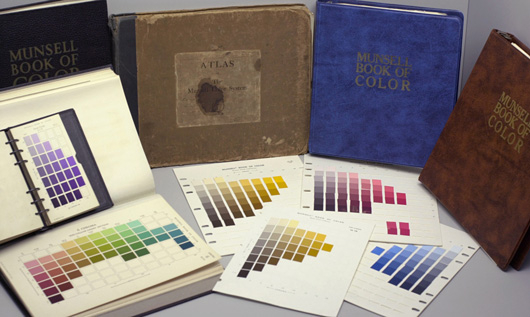
Using the Munsell Color System parameters, fancy colored diamonds are graded by measuring Hue, Tone, Saturation and the diamond’s uniformity of color distribution. Following this process, gemologists describe, as accurately and as consistently as possible, the color seen. This disciplined approach is consistently used to determine the final outcome of a diamond’s color.
The definition of Hue is complicated. Diamonds can appear to have a single hue, for example, fancy yellow. Or diamonds can have a secondary or even third color that contributes to its final color determination. An example of this is “fancy greenish-yellow”, or “fancy greenish-brownish-orange.”
There are five primary hues on the “color wheel,” including yellow, blue, green, purple and red. These hues can be described singly or in combinations with intermediate hues as given above. Among natural fancy colors yellow, brown, grey and black are most abundant. Other hues like orange, pink, purple, blue and green are much less common. And while natural red diamonds exist they are extremely rare.
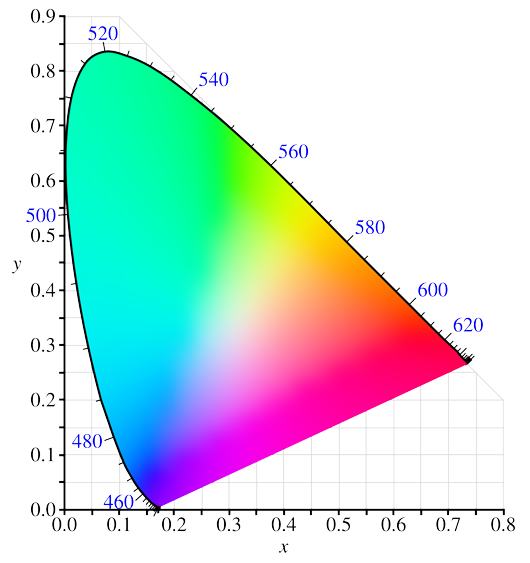
A color’s “strength” is identified in a combined saturation-tone grade, for example light, dark, intense, deep, or vivid. Sometimes, a single, generic color without a prefix is used to describe a diamond’s color outcome.
When grading fancy colors, reference master stones are used, and the final color grade is always given by consensus of several experienced gemologists. Color definition is, in the end, subjective, but a gemologist is a trained professional who, like a doctor, assesses the results of his examinations, and describes the color in a disciplined and consistent way.
Treated and processed fancy colored diamonds
Marie Curie was the first scientist to irradiate diamonds. Irradiated diamonds in yellow, orange, green, blue and pink shades are free of residual radioactivity. After irradiation, the resulting fancy color is steady and will not fade.
Black color is currently obtained by a graphitization process.
The High Pressure, High Temperature (HPHT) processed diamonds, no irradiation, generate remarkable permanent colors, such as pink, blue, and a large range of yellow, lime, orange and brown hues.
Lab grown fancy colored diamonds
The fancy colored diamond landscape has been revolutionized by advancements in laboratory-grown technology. Today, it’s possible to create diamonds in virtually every hue of the rainbow, including intense and vivid blue, pink, yellow, green and even red, among many others. These lab-grown gems possess the exact same chemical, physical, and optical properties as their natural counterparts.
This breakthrough presents an unprecedented opportunity for consumers. Where natural fancy colored diamonds are historically rare and extremely expensive, available only to a select few collectors, lab-grown options make these colors accessible to a much broader audience. This allows individuals to own colored diamonds for engagement rings, unique jewelry pieces, or as personal expressions, fulfilling desires that were previously unattainable
For more information, fees or custom related services please contact us at info@igi.org or call your closest IGI worldwide location.